 By Sheharyar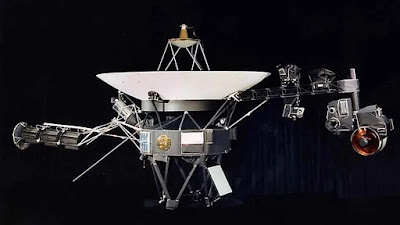
In a significant turn of events, NASA’s Voyager 2 probe, stationed billions of miles away from Earth, has unexpectedly lost contact with Earth due to an erroneous command sent to it, as revealed by the space agency. This unforeseen incident occurred last month when the spacecraft, which has been on an exploration mission since 1977, tilted its antenna by two degrees away from Earth.
As a consequence of this mishap, the probe has ceased both sending data and receiving commands. However, a glimmer of hope emerged on Tuesday when NASA detected a carrier signal from the spacecraft during its routine sky scan. This signal, often likened to the probe’s “heartbeat,” brought reassurance to the engineers as it confirmed that Voyager 2 was still broadcasting, just as they had expected.

Despite this development, NASA remains optimistic that communication with the probe will be restored in October when the probe is scheduled to reset. Presently, Voyager 2 finds itself at a staggering distance of more than 12.3 billion miles (19.9 billion km) from Earth, traveling at a mind-boggling estimated speed of 34,390 mph (55,346 km/h) through interstellar space, the vast expanse between stars.
Since the 21st of July, Voyager 2 has been unable to receive any commands or transmit data back to Earth’s Deep Space Network, an array of massive radio antennae spanning the globe. Ground controllers are likewise unable to issue commands to the spacecraft. However, NASA has deployed its large dish located in Canberra, Australia’s capital, in an attempt to capture any stray signals from Voyager 2. Given the vast distance, it takes over 18 hours for signals to travel from the spacecraft to Earth.
To reestablish contact, the antenna will also send the correct command toward Voyager 2’s location. The Jet Propulsion Laboratory, responsible for managing the Voyager missions, remains hopeful that the probe will respond to this initiative. On a positive note, Voyager 2 is programmed to reset its orientation multiple times each year to keep its antenna pointed toward Earth. The next scheduled reset is set for the 15th of October, and NASA anticipates that it will enable communication to resume.
In the meantime, NASA expects that the spacecraft, equipped with an array of scientific instruments, will continue to follow its planned trajectory through the universe. Both Voyager 2 and its twin, Voyager 1, hold the distinction of being the only spacecraft to venture beyond the heliosphere, the protective bubble of particles and magnetic fields generated by the Sun. Voyager 2 reached interstellar space in 2018, followed by Voyager 1 in 2012.
These remarkable probes were specifically designed to capitalize on a rare alignment of outer planets that occurs roughly every 176 years, enabling them to explore Jupiter and Saturn extensively. Voyager 2, in particular, achieved the incredible feat of flying by Neptune and Uranus during its journey. As for Voyager 1, it currently stands as humanity’s most distant spacecraft, positioned nearly 15 billion miles away from Earth.
NASA shared an update on X, formerly known as Twitter, through the account of Voyager 1, affectionately known as V1. The tweet humorously referenced Voyager 2’s temporary data transmission hiatus, while also emphasizing its own remarkable journey far from home.