 By Sheharyar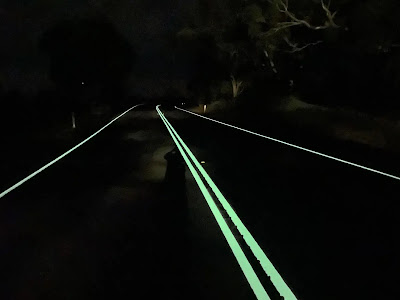
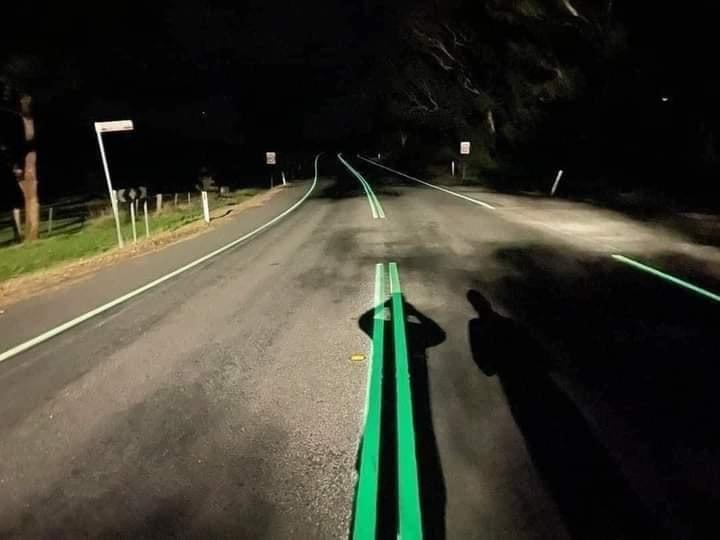
An Australian company is currently conducting tests with glow-in-the-dark lines on the roads. They are adopting the same principle used in children’s stickers and toys, all with the ambitious goal of enhancing road safety. This company is currently testing a revolutionary safety measure glow-in-the-dark lines on the roads.
The use of photoluminescent paint, known for its luminous properties, creates these remarkable lines that can illuminate the road even in the absence of external light sources. This development may prove to be a significant breakthrough in nighttime driving safety. The idea is both fascinating and promising, offering potential improvements in visibility and driving experience after dark.

As the trial progresses, it will be captivating to observe how this innovative approach can contribute to making roads safer for everyone. This pioneering Australian project demonstrates a commitment to leveraging creative solutions to enhance the well-being of its citizens on the road. The selected roads in Victoria are now adorned with this special paint, and it comes with a price tag of AUD $4 million (USD $2.82 million) funded by taxpayers.
The potential benefits are promising. These glow-in-the-dark lines can guide drivers more effectively, especially through curves and intersections, even for those unfamiliar with the area. This innovation is part of the state’s ‘Innovation Package,’ showcasing three treatment projects by Tarmac Linemarking.
The second treatment, another part of the package, involves using road markings with higher reflectivity. This is achieved by infusing thicker glass beads and thermoplastic into the paint, although it does not emit the mesmerizing glow like the first approach. Nevertheless, it ensures better visibility as car headlights illuminate the road in the dark.
In essence, Australia is embarking on an ambitious trial with glow-in-the-dark road lines, aiming to revolutionize safety on its roads. By blending perplexity and burstiness into this exciting project, they seek to create a low-predictability solution to improve driving experiences for everyone. The third measure takes a different approach by incorporating LED tactile paving at controlled pedestrian crossings.
These innovative LEDs will cleverly synchronize with the colors of the traffic lights, providing an extra layer of visibility for pedestrians who, often engrossed in their phone screens, tend to keep their eyes fixed downward.
While the idea of glow-in-the-dark lines on the roads is intriguing and promising, it hasn’t been immune to criticism. Some skeptics are concerned that this endeavor might turn into a financial burden, as the lines would require frequent refreshing to maintain their glow. Moreover, there are apprehensions about the paint used in the project potentially containing hazardous, radioactive materials.

A few individuals even raise concerns about safety, fearing that drivers might be tempted to turn off their headlights to witness the mesmerizing effect, which could pose risks on the road.
In the pursuit of better safety and visibility, these measures are pushing the boundaries of innovation, but it’s essential to address and mitigate any potential drawbacks to ensure a successful and secure implementation.